The Land
27 acres, two soils, and a plan
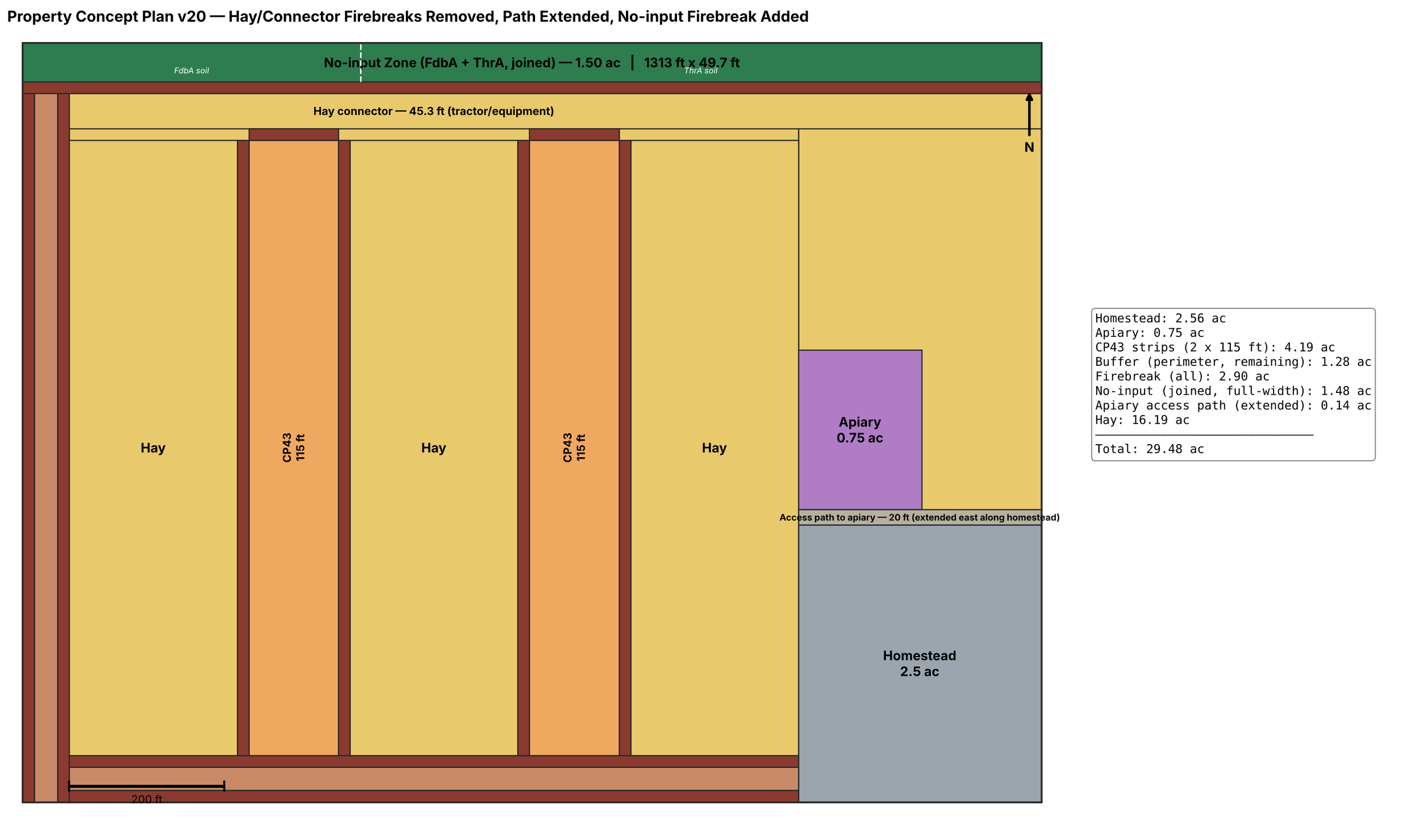
Our farm is a single, flat field in northern Boone County, Indiana, farmed for corn and soybeans for many years. After the final soybean harvest in fall 2027, we'll replant it as a patchwork of prairie, hay, hedgerows and habitat, so we can see what actually works.
What's under our feet
Two soil types run through every area of the farm. Treaty silty clay loam covers about 63% of the field and is dark, heavy and slow to drain. Fincastle silt loam covers about 37%, is lighter, and shows from the air as paler bands. Because both soils cross every area, we can see how the same planting behaves on two different foundations.
The hay field
About 16 acres will grow native warm-season grasses, big bluestem and Indiangrass, with Illinois bundleflower and partridge peas, native legumes that adds nitrogen and flowers for pollinators. We'll cut once a year between July 15 and August 1, after ground-nesting birds have raised their young. Details for buyers are on the Hay page.
Prairie strips
Two strips of native prairie, each 115 feet wide, run north to south through the hay field. Prairie strips are a farm practice developed and studied in the Midwest: planted among working land, they catch soil and nutrients and give pollinators and birds food and shelter. Ours will include white false indigo among the grasses and wildflowers.
Edge buffers
The field's borders are planted with grass and native forage plants to filter runoff before it leaves the farm and to give wildlife cover.
Firebreaks
Mowed lanes keep our controlled burns contained. We'll plant them with short native species, side-oats grama, purple prairie clover and lanceleaf coreopsis, and they double as walking paths and open ground for bluebirds.
Hedgerows
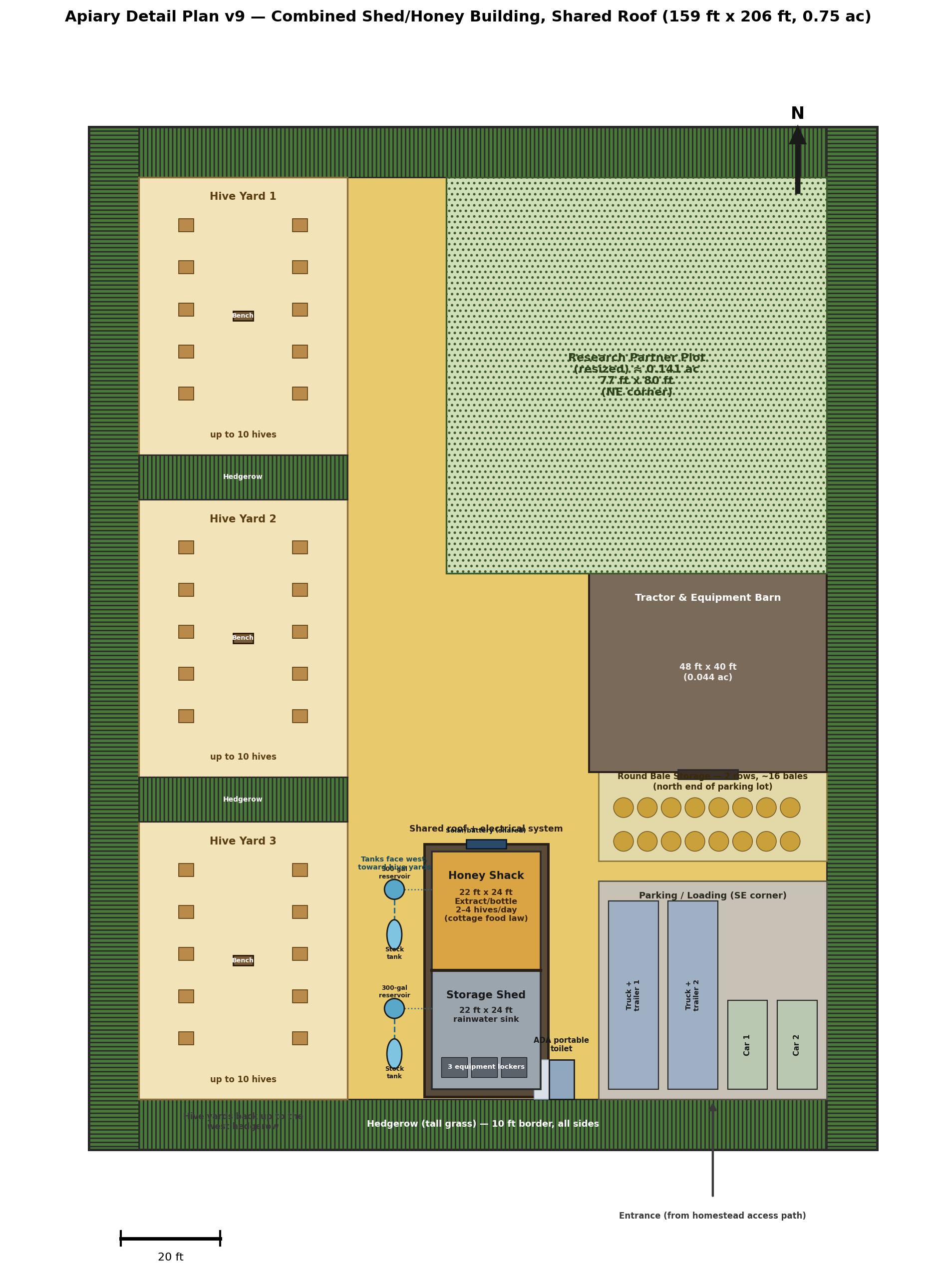
Tall switchgrass surrounds the apiary, blocking wind for the hives and giving wildlife cover.
The No-Input Zone
Along the north edge is a 1.5-acre strip we'll prepare after the final harvest and then leave unplanted. It's the control for the whole farm: it shows what this land does when people stop planting it. "No input" doesn't mean "no management." We'll scout it through the season, spot-treat noxious weeds such as Canada thistle and Johnsongrass, and mow or treat any weed patch before it can set seed near a neighbor's field. A mowed firebreak separates it from the rest of the farm.
The apiary
A ¾-acre apiary sits in the east part of the field, surrounded by switchgrass. It has three hive yards with room for up to 10 hives each and storage shed under one roof with rainwater collection and solar power, plain and mineralized water for the bees, a small research plot, and gravel access. Details are on the Hive Yards and Honey pages.
Homes for wildlife
We're planning nest boxes for birds and bats that eat insects and hunt rodents: one American kestrel box overlooking the prairie and hay, two Eastern screech owl boxes at opposite corners of the hedgerows, three bluebird boxes along the firebreaks, and three bat boxes on sunny hedgerow edges.
Fire vs. mowing
Native prairie needs periodic disturbance to stay healthy, traditionally from fire and on modern farms often from mowing. We're splitting our prairie strips and edge buffers between the two methods, on both soil types, so the results can be compared.
Measuring the change
After the final harvest and before planting, we'll take 48 deep soil cores, three from each of 16 zones covering every combination of area, soil type and management. We'll resample over the years and publish the results. Researchers can learn more on the Research Partners page.
Being a good neighbor
We know a field like this raises fair questions for the people farming around it. Here’s how we plan to handle these:
Weeds. Every area, including the No-Input Zone, is scouted and managed for noxious weeds. Anything that threatens a neighbor's field gets treated or mowed before it seeds.
Controlled burns. Each burn follows a written prescribed burn plan, is carried out by a trained crew, and happens only when wind, humidity and direction are within safe limits. We'll tell our neighbors before each burn season and again on the day.
Drainage. The field's tile system was newly installed, and we placed the prairie and No-Input Zone where they disturb it least. We'll keep the tile and outlets maintained.
Spraying near our bees. Our hives will be registered with BeeCheck, so applicators can see where they are. Spraying on your own ground is your business. We'd just welcome a call before spray season so we can plan together.
If anything we do causes you a problem, please call or email us and we'll deal with it.
Timeline
November 2026: Finalize the conservation plan with NRCS and our conservation partners.
Fall 2027: Final soybean harvest, then baseline soil sampling.
Winter 2028: Prepare the ground and plant the seed mixes.
Summer 2028: Build the apiary and bring in the first hives.
2029 and beyond: First hay and honey harvests, controlled burns begin, repeat sampling.
Results are shared for information and demonstration only, not as agronomic advice.